







Архів
18.11.2026


 0
 0
 Сенсорні панелі оператора Weintek

Сенсорні панелі оператора Weintek
 Вимірювачі-індикатори
 Регулятори (ПІД, ON/OFF)
 Модулі вводу/виводу

Модулі вводу/виводу
 Бар'єр іскрозахисту

Бар'єр іскрозахисту
 Реєстратори архіватори

Реєстратори архіватори
 Вимірювачі та перетворювачі параметрів електричної мережі

Вимірювачі та перетворювачі параметрів електричної мережі
 Лічильники, таймери, тахометри

Лічильники, таймери, тахометри
 Сигналізатори і регулятори рівня рідини

Сигналізатори і регулятори рівня рідини
 Програмовані логічні контролери

Програмовані логічні контролери
 Ручні задатчики сигналів

Ручні задатчики сигналів
 Прилади технологічної сигналізації

Прилади технологічної сигналізації
 Блоки живлення

Блоки живлення
PLC контролери Codesys
PLC контролери Codesys
 Нормуючі перетворювачі

Нормуючі перетворювачі
Блоки гальванічної розв'язки та розгалуження
Блоки гальванічної розв'язки та розгалуження
 Інтерфейсні перетворювачі та підсилювачі

Інтерфейсні перетворювачі та підсилювачі
 Аналітичні прилади

Аналітичні прилади
 Блоки комутації

Блоки комутації
Блоки контролю і захисту
Блоки контролю і захисту
 GSM маршрутизатори (модеми)

GSM маршрутизатори (модеми)
Архів
18.11.2026
Автор
Valerii Dykhnilkin, Volodymyr Kapustiak, Microl LLC
E-mail: asutp@microl.ua
Production automation as such is a rather complex task, and it can be successfully solved using products not only from foreign but also from Ukrainian manufacturers.
There is an old saying that will probably never lose its relevance: "We serve you: a) fast; b) well; c) cheap. Please choose any two." It is a kind of axiom that has to be accepted as it is — obvious and needing no proof. Fast and cheap means poorly done. Good and cheap means certainly not fast. And fast and good means the "Total" line of the quotation will definitely shock you.
In the development and implementation of process control systems, things are mostly just like that, for a number of reasons.
Production automation is a rather complex task. First of all, it is the specialized work of design institutes and the engineering departments of system integrators. They define the automation strategy: how it will be organized for the specific production site and on what hardware. The equipment chosen for automation directly determines how much money will ultimately be spent. That is why the question "where can I find it cheaper?" (without compromising quality, of course) is always relevant — and the answer often leads to a domestic manufacturer.
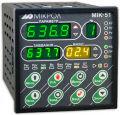
Products of Microl (Ivano-Frankivsk) have been mentioned in previous issues of Mir Avtomatizatsii more than once, but mostly the focus was on the MIK-51 and MIK-52 series of programmable logic controllers (PLCs). However, the company's range is not limited to these controllers. Microl's catalog lists more than 120 products: microprocessor controllers and regulators, digital process indicators, manual control units, signal and interface converters, microprocessor counters, power supplies and much more.
Overall, Microl's range of secondary instrumentation makes it easy to choose the right device for a specific task. In this article we give a brief overview of Microl products from the point of view of production automation.
Any automation, one way or another, involves converting the signal from a primary sensor, displaying it, controlling, generating control signals for actuators, alarms, interlocks and various protections, manual control and processing feedback signals. We will review Microl products in this order (Fig. 1).
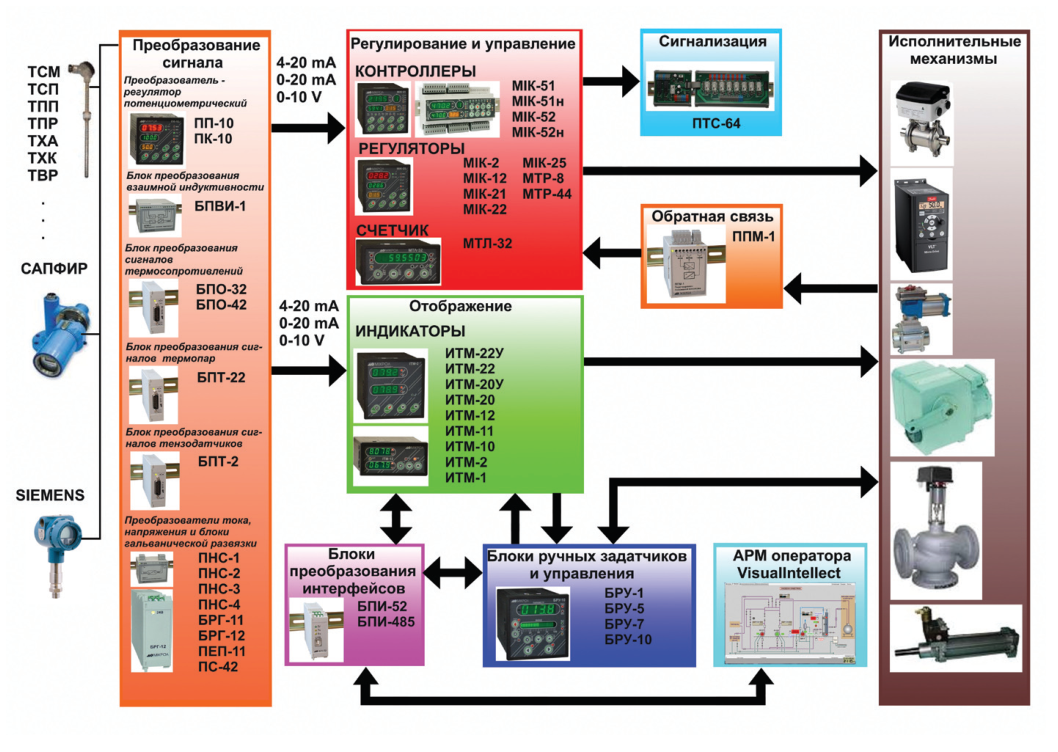
Fig. 1. Production automation with Microl equipment
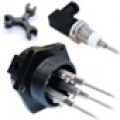
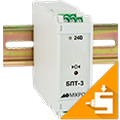
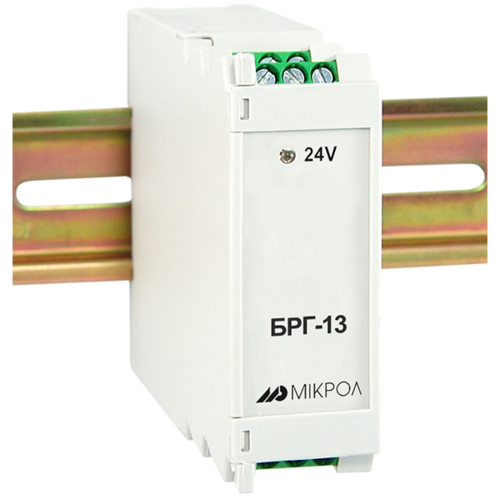
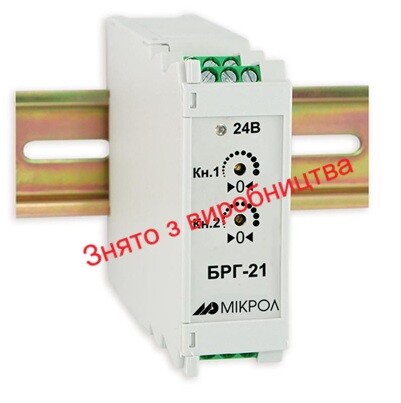
Microl's wide range of signal converters means there is no need to worry about compatibility between secondary instruments and a variety of sensors and actuators. Here is a far from complete list:
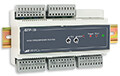
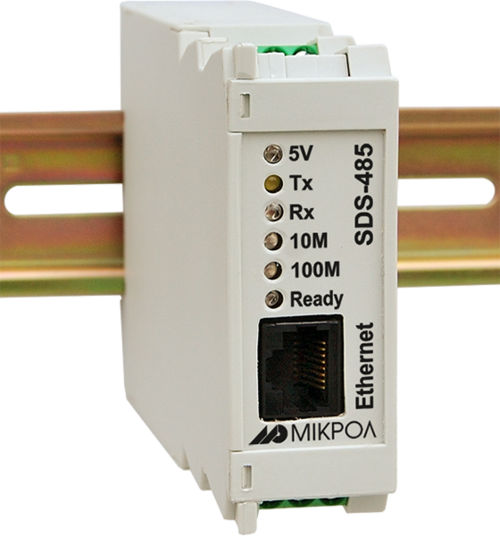
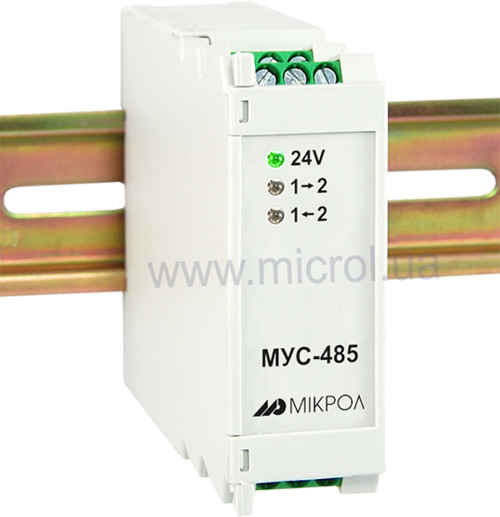
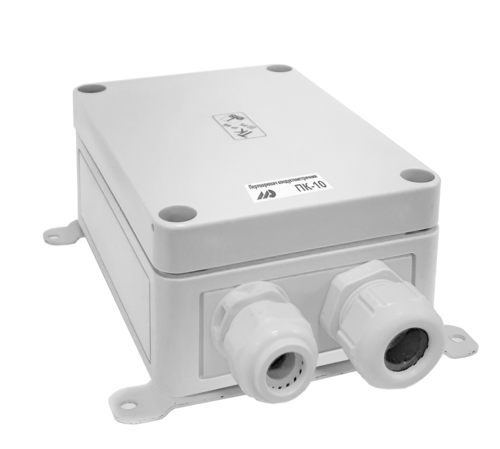
There are also interface converters for linking instruments to the upper level of the automation system: BPI-485 (RS-232 ↔ RS-485), BPI-52 (USB ↔ RS-485) and BPI-2k (RS-232 ↔ IRPS current loop).
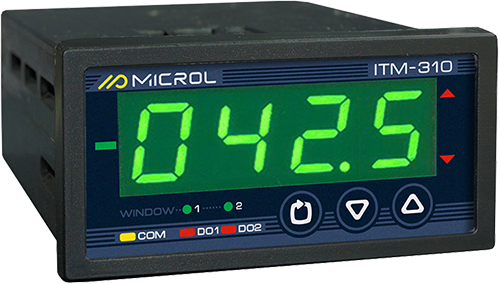
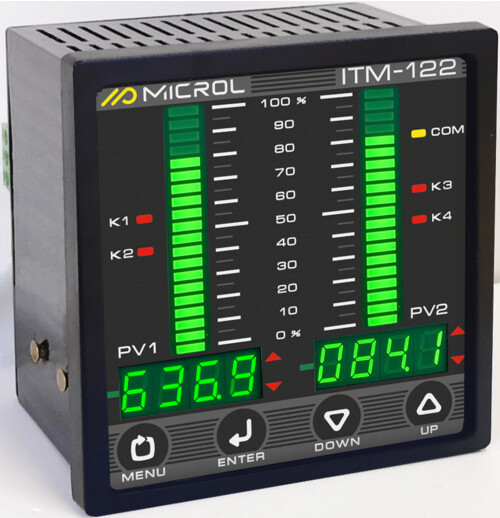
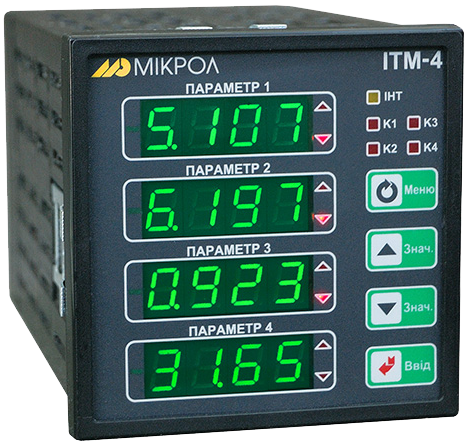
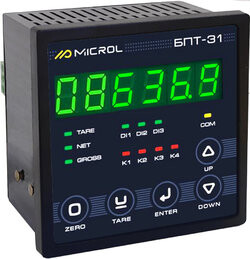
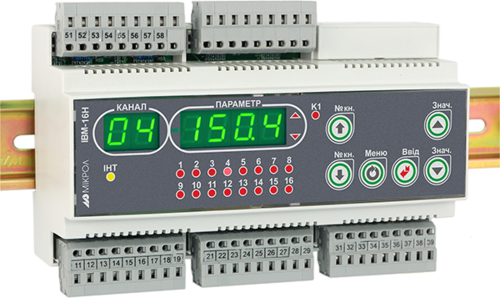
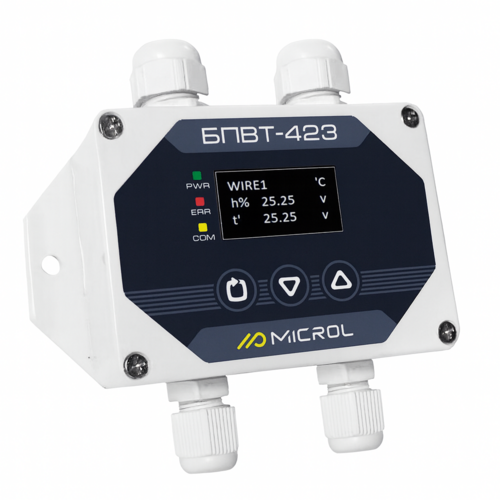
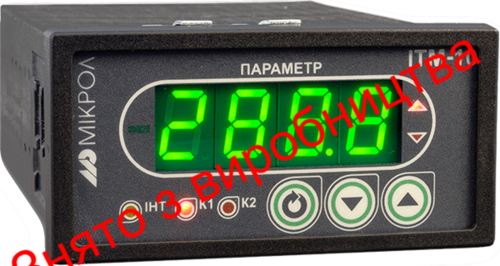
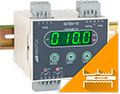
Microprocessor indicators are used to display process values. Microl indicators are modern universal single- and dual-channel digital instruments with discrete outputs. All ITM series indicators measure process values with high accuracy. They are designed for:
In addition to panel-mount indicators, frameless ITM-1 indicators are produced specifically for installation in control desks, mimic panels, mimic diagrams and so on.
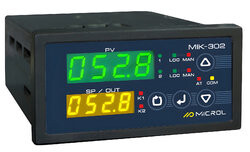
Control tasks directly call for a variety of regulators and controllers.
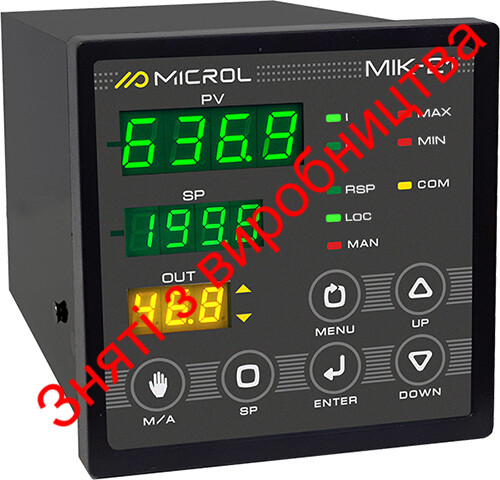
Unlike the universal freely programmable MIK-51 and MIK-52 controllers, all other Microl microprocessor instruments are freely configurable. For example, the MIK-21 regulator is a configurable device: it can be set up to control a particular variable exactly as required. Its internal software contains several ready-made control algorithms, and the device is configured by selecting one of them and tuning its parameters. A controller, on the contrary, is not programmed for any task out of the box: you have to write the program yourself based on your own needs and the requirements of the process. On the one hand, this is a wide field for experimentation, since a controller can be programmed for anything. On the other hand, someone has to write the program.
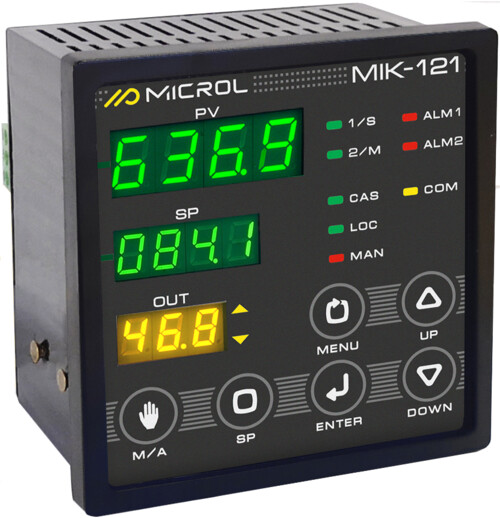
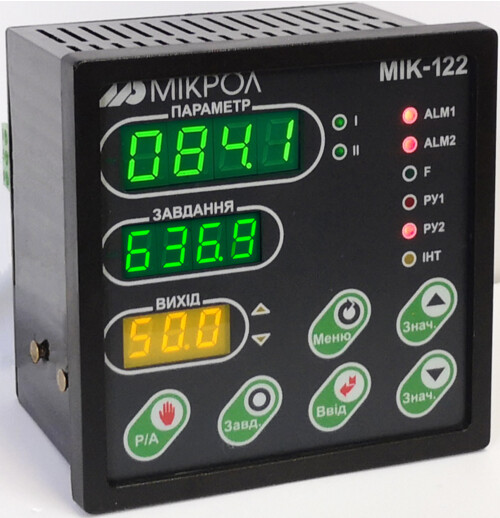
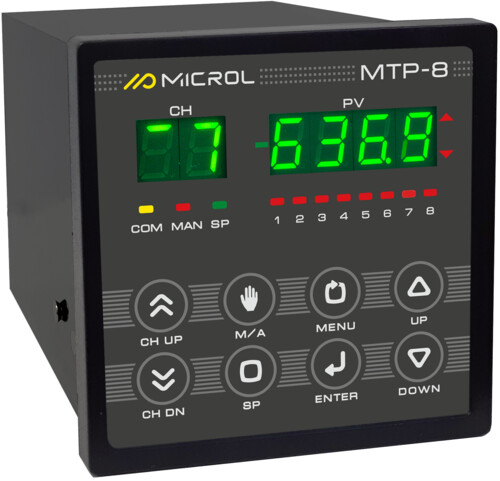
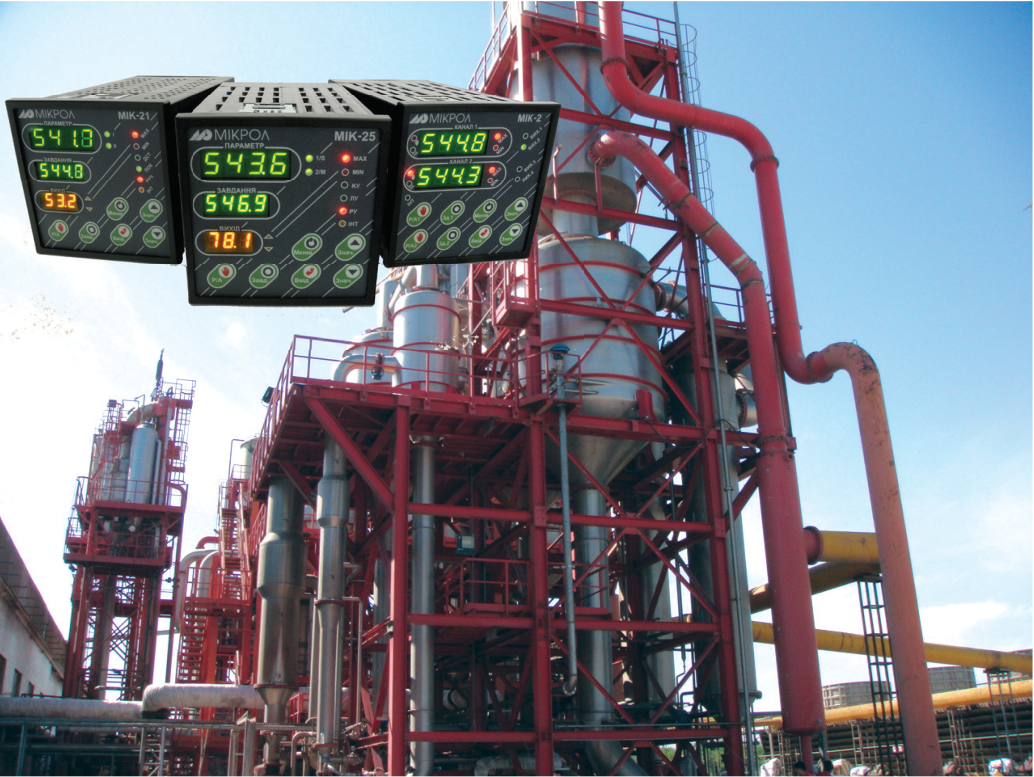
Seven types of microprocessor regulators are currently produced: single-loop MIK-12, MIK-21 and MIK-25, dual-loop MIK-2 and MIK-22, and 8-loop MTR-8 and MTR-44. The regulators differ not only in the number of control loops but also in their internal software structure. For example, the MIK-25 can operate in one of 8 modes:
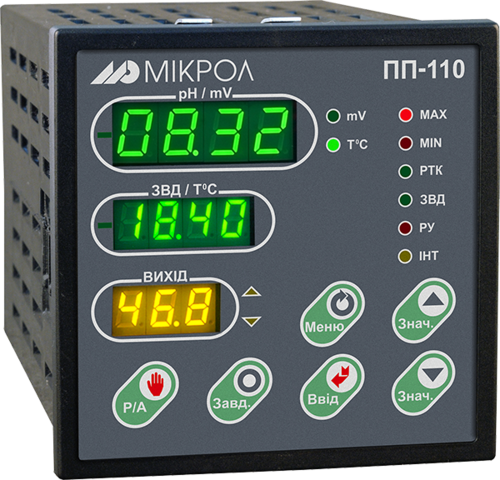
Microl also makes specialized instruments — for example, the PP-10 pH converter-controller, which measures and (depending on configuration) controls pH or oxidation-reduction potential (mV/ORP) in aqueous solutions.
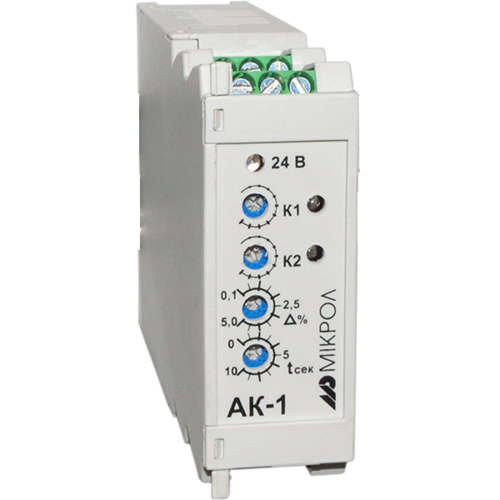
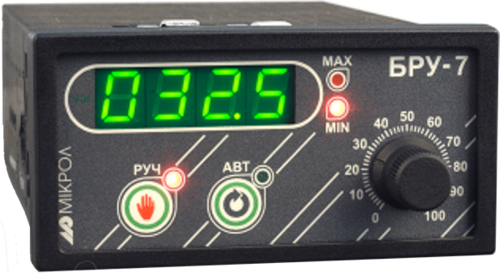
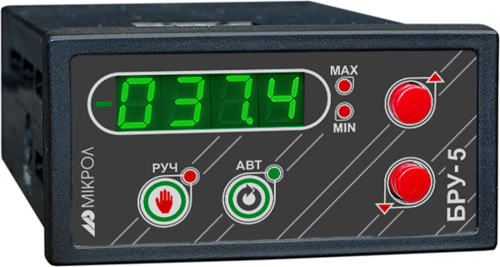
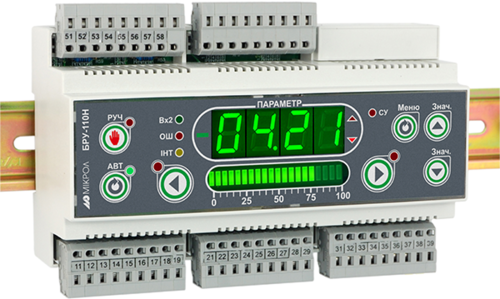
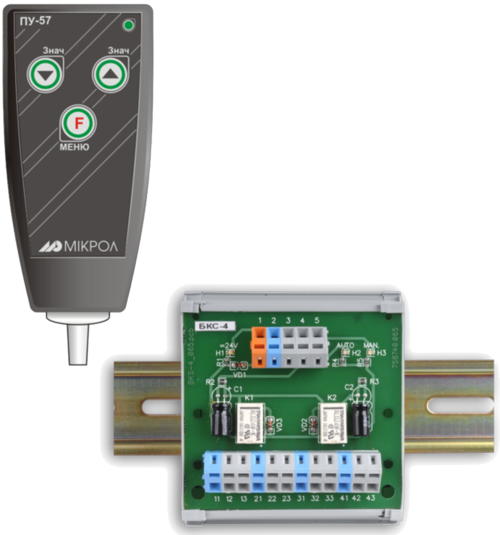
Another line of Microl process control instrumentation is manual control units. BRU units are used in industrial automation systems as:
BRU units are installed in the control room or locally and inserted into the control signal line between the secondary instrument (regulator or controller) and the actuator. When the BRU unit is in automatic mode, the signal from the controlling instrument goes straight to the actuator. When the unit is switched to manual mode, the operator controls the actuator directly from its front panel. Being able to take control of the process "into your own hands" at any moment gives the operator confidence and helps the plant supervisor "sleep soundly".
Automating production does not always mean replacing and/or installing new equipment. Upgrading an outdated but still working process control system is often a perfectly justified step. For example, REMIKONT and LOMIKONT controllers can still be found at chemical, oil refining and food plants. Since these controllers are multichannel (one can run an entire workshop), there is often neither the time nor the money to replace them completely with something more modern.
For replacing faulty modules one by one, Microl produces a full range of upgraded modules for REMIKONT (R-110 and R-112) and LOMIKONT (L-110 and L-112) microprocessor controllers: digital and analog I/O modules, input signal converters, memory modules, a processor module, power supplies and more. One upgraded module can replace several obsolete ones. For example, the MP7 memory module is a full functional replacement for seven LOMIKONT modules (PZU2, OZU4.4o, OZU4.5o, OZU4.7o, OZU4.7r, MPP and BSEL), yet costs an order of magnitude less than all of them together.
In addition to hardware for process control systems, Microl develops a range of software products. First of all, there is the Visual Intellect SCADA system — a universal software package for the operator workstation. Visual Intellect (Fig. 2) includes everything needed to run a computerized control room for a process facility of any complexity. Its convenient multitasking graphical shell, powerful mathematical core and network interaction manager make it possible to build centralized and distributed process control nodes. Visual Intellect is easy to work with: system functions are presented on screen fully and clearly, as far as possible from real programming and close to the user's intuition, and the context help, on-screen hints and help system are convenient and informative.
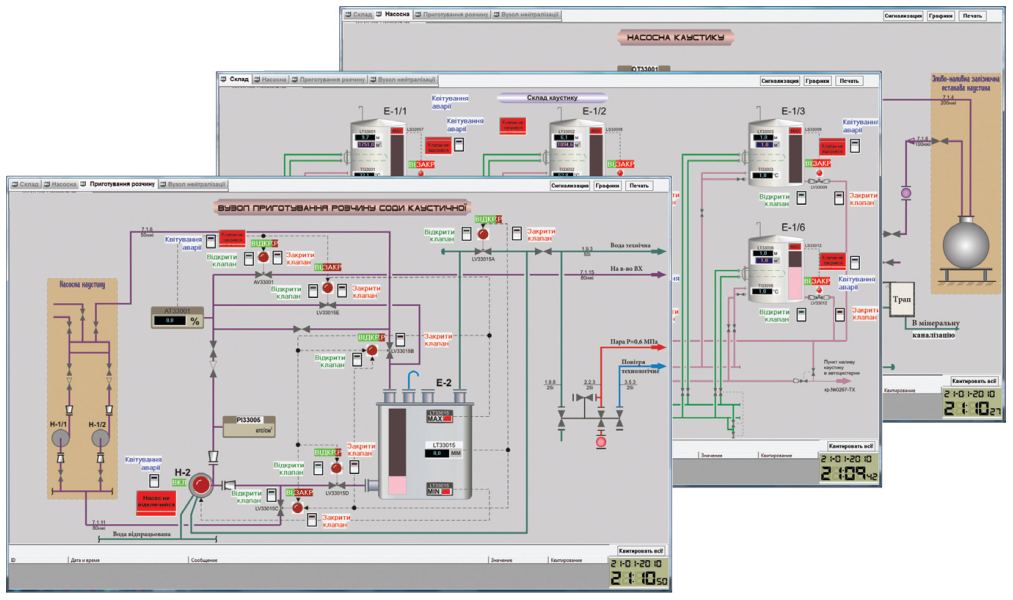
Fig. 2. Visual Intellect SCADA system
The ALFA FBD program editor is used to program Microl's MIK-51, MIK-51N, MIK-52 and MIK-52N microprocessor controllers in the function block language.
Microl OPC Server, also developed by Microl, automates data exchange between Microl indicators, regulators and controllers and third-party SCADA systems.
At the time of publication, both programs were free and available for download from the company's website. Current software is available in the Software section at www.microl.ua.
In conclusion, Microl has managed to find a sensible compromise in the "fast–good–cheap" triangle. Its products are affordable and of high quality, designed to operate from −40 to +70 °C. A full cycle of warranty and post-warranty service is provided; the warranty period for all instruments was 3 years. And the ease of configuring, installing and maintaining Microl instruments ensures fast development and implementation of a wide range of process control systems based on them.
For more information about the products mentioned in this article, please contact Microl LLC:
+38 (0342) 502-701
+38 (067) 359-70-90
+38 (095) 092-07-28
sale@microl.ua, microl_zbut@microl.ua, zbutmicrol@gmail.com
www.microl.ua
Technical support:
+38 (0342) 502-702
+38 (067) 704-00-29
+38 (095) 302-37-57
support@microl.ua, supmicrol@gmail.com
Originally published in Mir Avtomatizatsii (World of Automation) magazine, No. 1, March 2010.
Відкрити буклет / Завантажити PDF